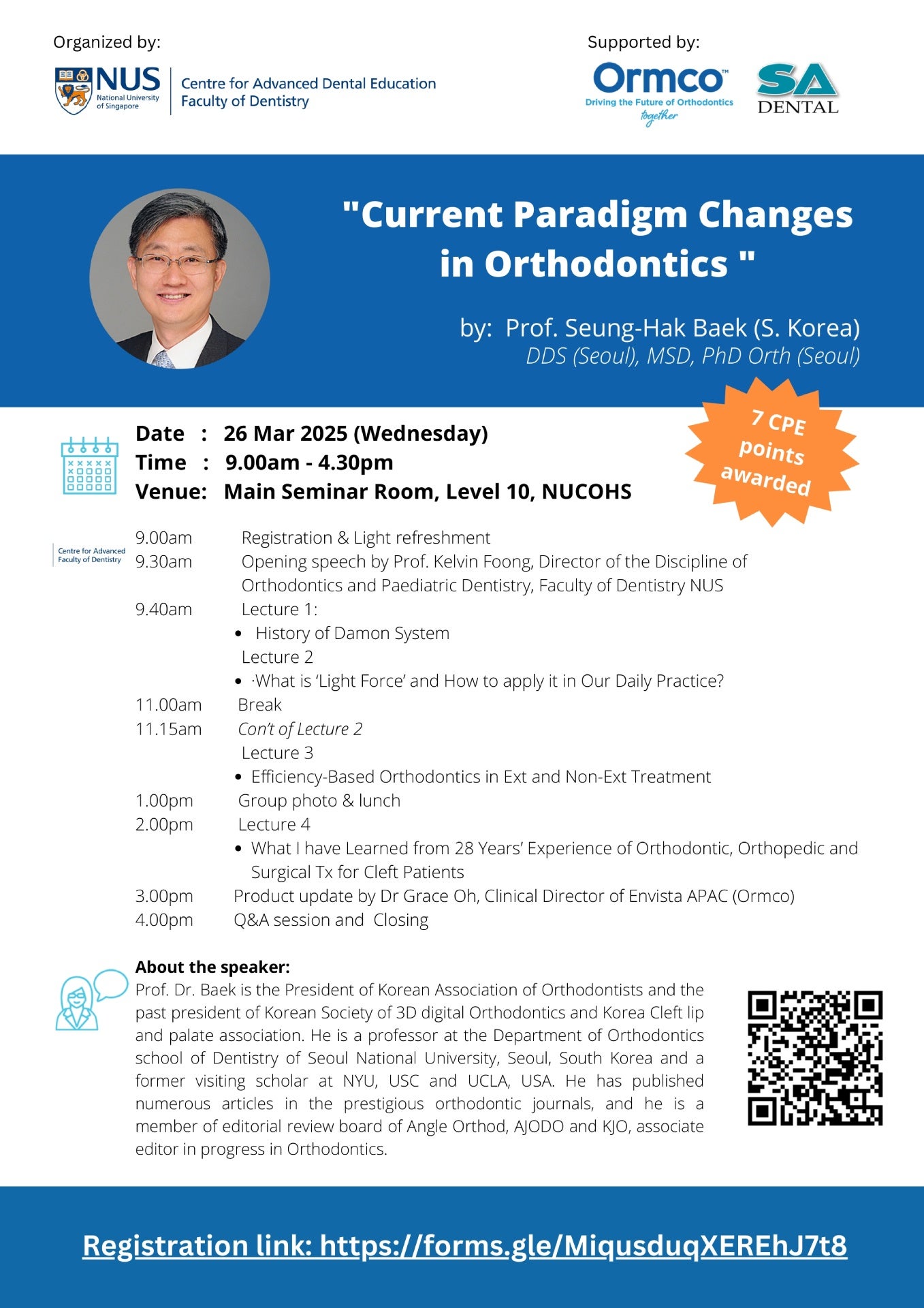
Current Paradigm Changes in Orthodontics
Prof. Dr. Baek is the President of Korean Association of Orthodontists and the past president of Korean Society of 3D digital Orthodontics and Korea Cleft lip and palate association.





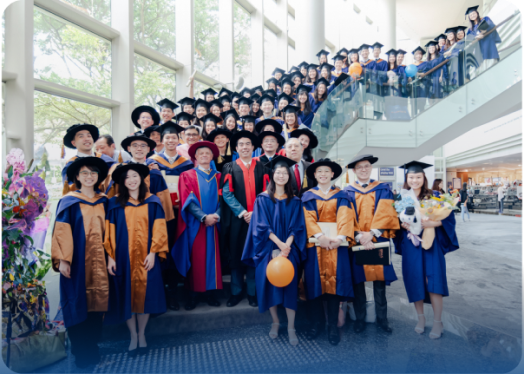


Prof. Dr. Baek is the President of Korean Association of Orthodontists and the past president of Korean Society of 3D digital Orthodontics and Korea Cleft lip and palate association.
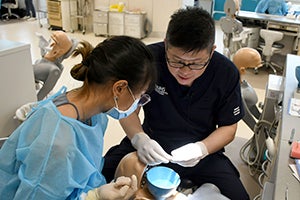
Traditionally, clinicians are familiar with full pulpectomy and root canal treatment as the first-line option for managing pulp which is deemed irreversibly inflamed.
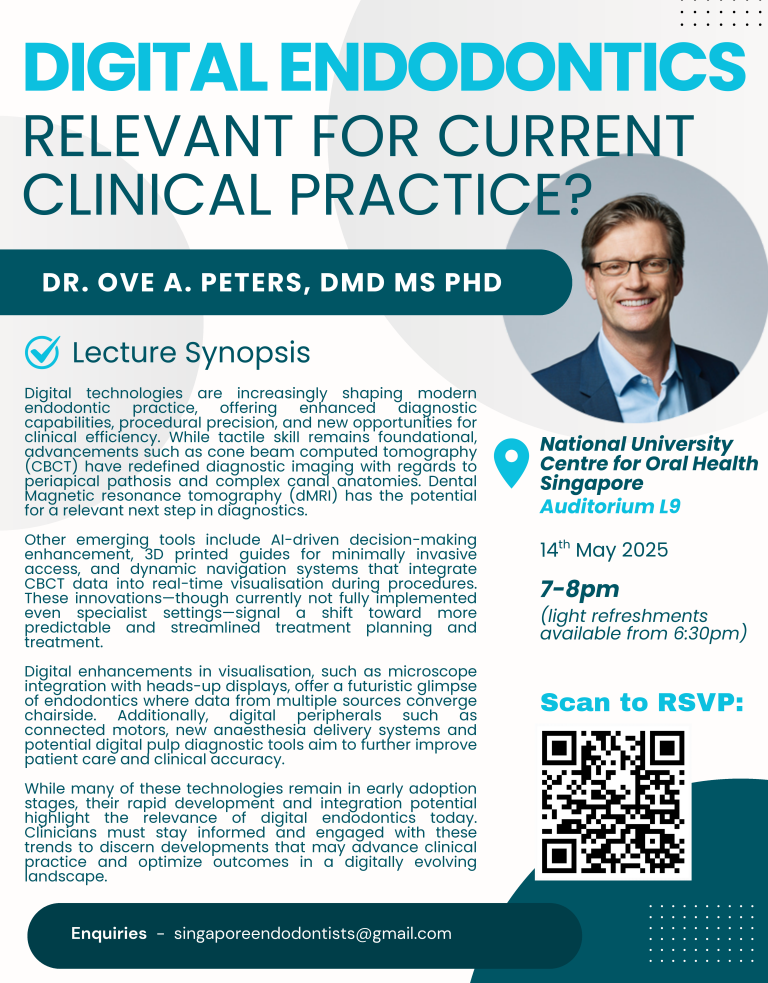
Digital technologies are increasingly shaping modern endodontic practice, offering enhanced diagnostic capabilities, procedural precision, and new opportunities for clinical efficiency. While tactile skill remains foundational, advancements such as cone beam computed tomography (CBСT) have redefined diagnostic imaging with regards to periapical pathosis and complex canal anatomies. Dental Magnetic resonance tomography (dMRI) has the potential for a relevant next step in diagnostics. Other emerging tools include Al-driven decision-making enhancement, 3D printed guides for minimally invasive access, and dynamic navigation systems that integrate CBCT data into real-time visualisation during procedures. These innovations-though currently not fully implemented even specialist settings-signal a shift toward more predictable and streamlined treatment planning and treatment.
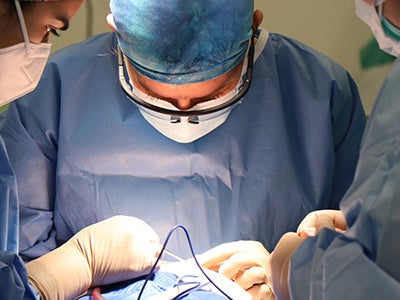
This course is jointly conducted by NUS CADE and Shanghai Ninth People’s Hospital. The course will cover submental island, pectorals major flaps, radial forearm, anterolateral thigh, profunda artery perforator, fibula, DCIA free flaps, Zygomatic Implant and more.
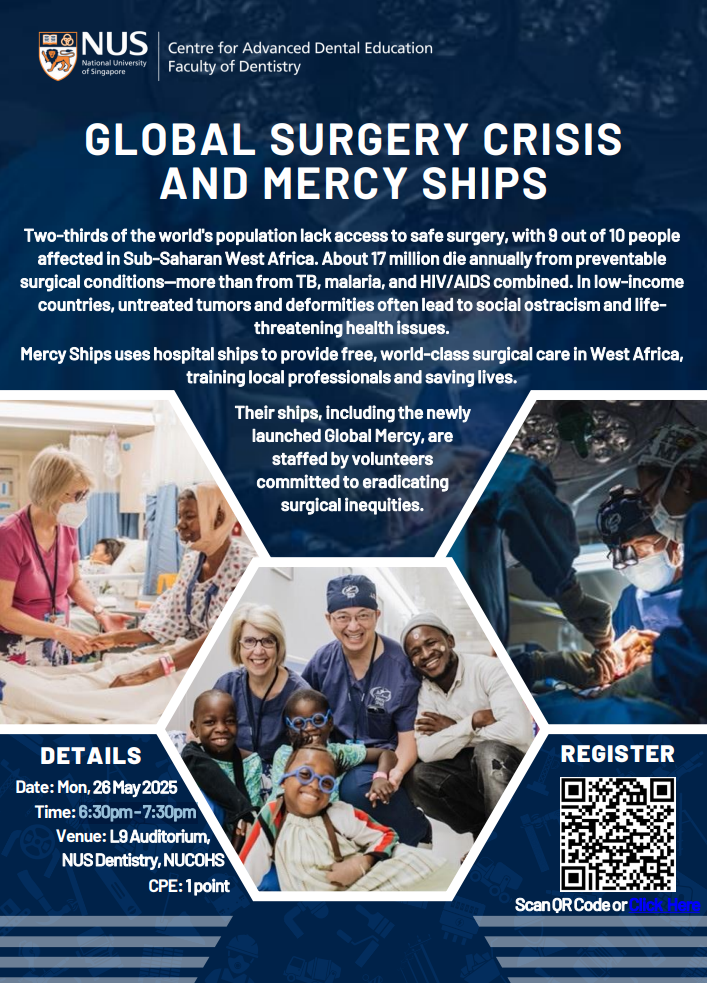
Two-thirds of the world's population lack access to safe surgery, with 9 out of 10 people affected in Sub-Saharan West Africa. About 17 million die annually from preventable surgical conditions—more than from TB, malaria, and HIV/AIDS combined. In low-income countries, untreated tumors and deformities often lead to social ostracism and life threatening health issues. Venue: L9 Auditorium, Date: Mon, 26 May 2025 Their ships, including the newly launched Global Mercy, are staffed by volunteers committed to eradicating surgical inequities. Mercy Ships uses hospital ships to provide free, world-class surgical care in West Africa, training local professionals and saving lives.
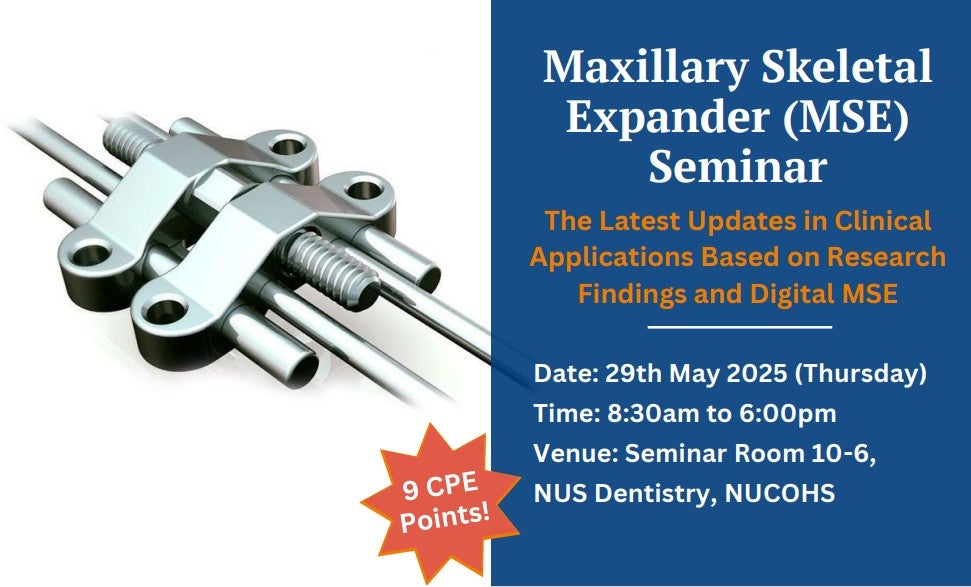
The Latest Updates in Clinical Applications Based on Research Findings and Digital MSE