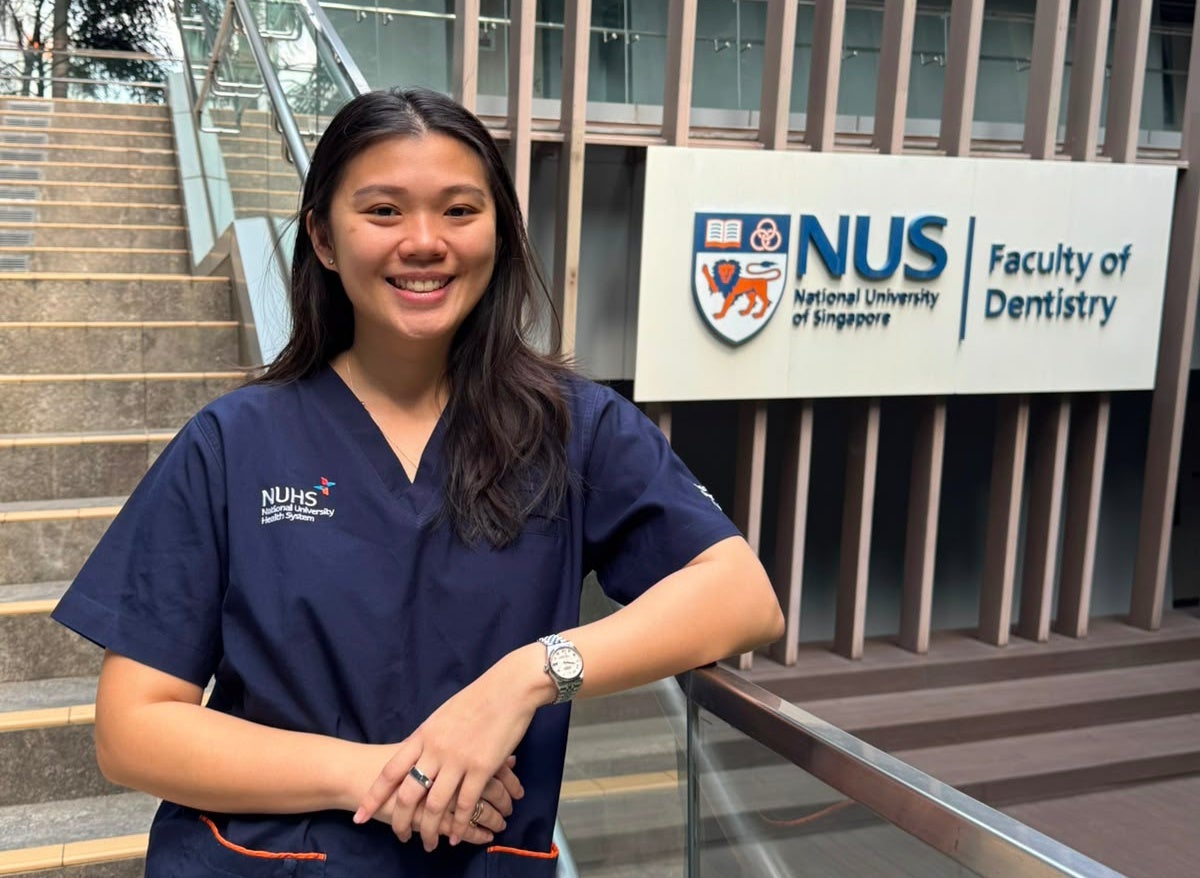
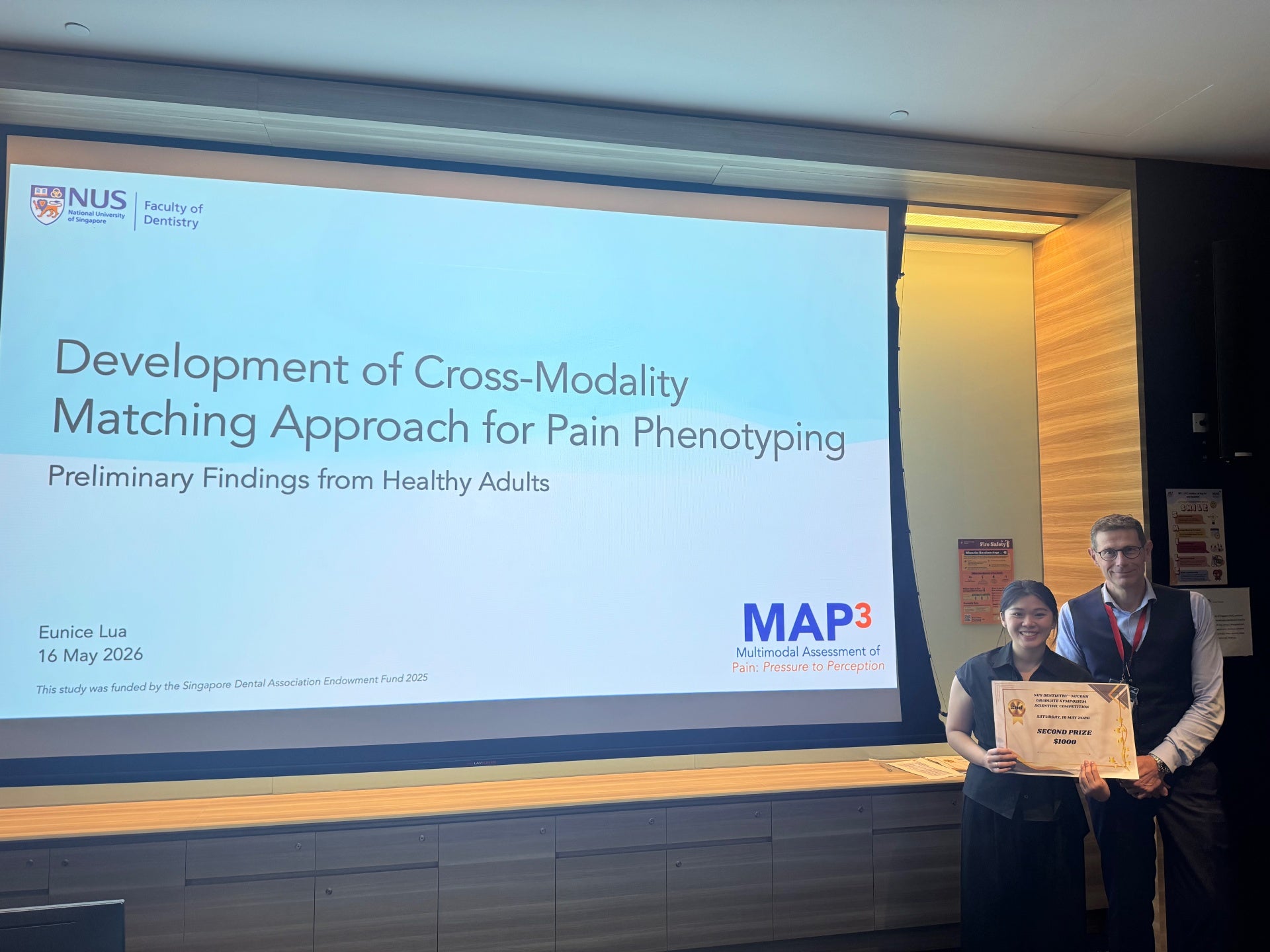
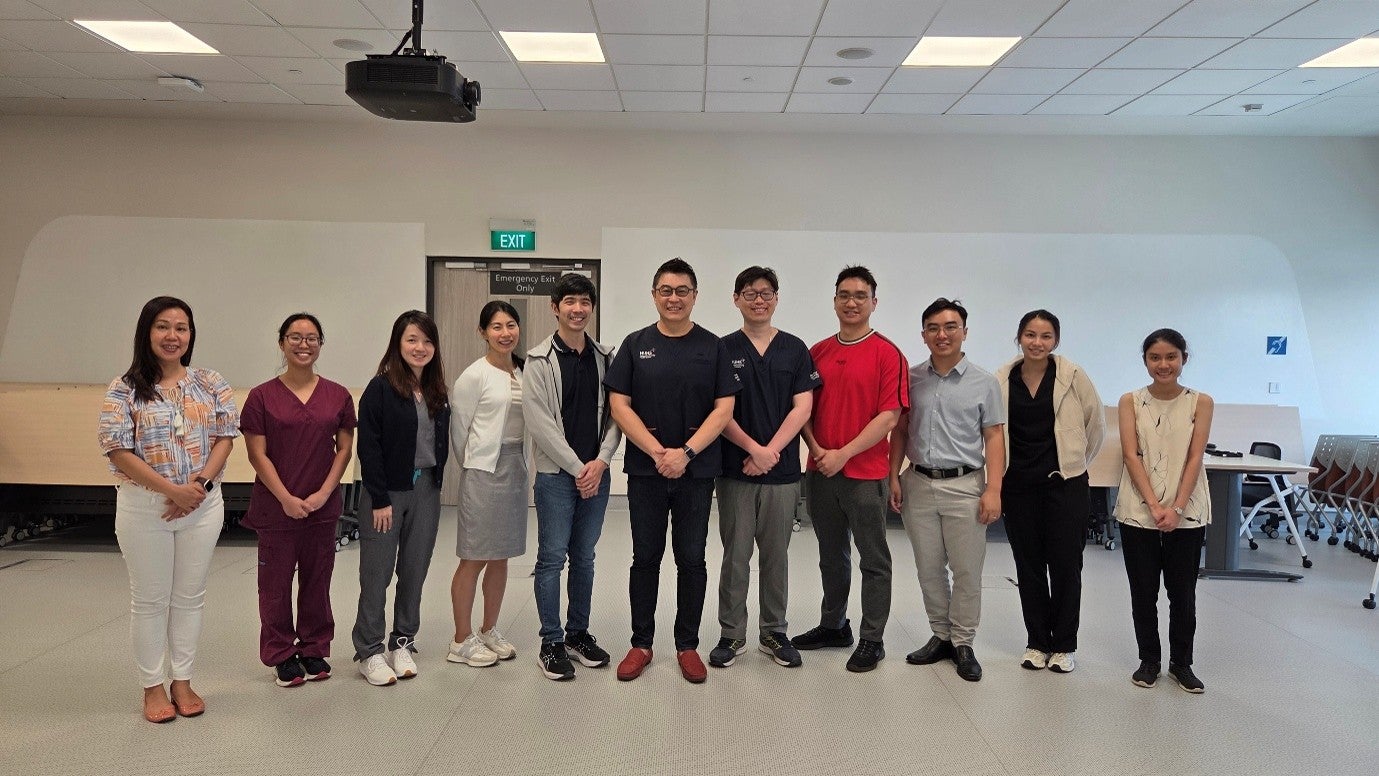
Congratulations to Dr Eunice Lua, whose research project was awarded Second Prize at the Scientific Competition held during the NUS Dentistry Graduate Symposium!
Titled “Development of Cross-Modality Matching Approach for Pain Phenotyping — Preliminary Findings from Healthy Adults”, Dr Lua’s project explores an important question in pain research: can we better understand pain by looking beyond a single pain threshold?
The work forms part of Project MAP3 (Multi-modal Assessment of Pain: Pressure to Perception), a collaborative research initiative involving NUS Dentistry, the NUS Faculty of Arts and Social Sciences, and Sweden’s Umeå University. The project is supported by the Singapore Dental Association Endowment Fund.
Advancing how we understand and assess pain
Conventional pressure pain testing often focuses on a single point of measurement — such as the pressure pain threshold (PPT), the point at which pressure first becomes painful, or pain tolerance, the maximum pressure an individual can endure.
However, pain is complex and highly individual. A single measurement may not fully capture how a person perceives and responds to pain.
In Phase 1 of Project MAP3, healthy adults from Singapore’s multi-ethnic population participated in a novel assessment that examined their responses across a range of individually calibrated pressure intensities, rather than relying on one static pressure point.
This enabled the research team to generate stimulus-response profiles, providing a more dynamic view of how pressure is perceived and experienced by different individuals.
Translating subjective pain into measurable responses
The study also combines pressure testing with complementary measures, including handgrip force, bite force, and pain drawings.
By exploring different ways of expressing and measuring pain, Dr Lua’s team hopes to better understand the relationship between subjective pain experiences and measurable responses.
This multimodal approach could ultimately help researchers and clinicians understand why people experience and communicate pain differently, contribute to improved pain assessment, and support the development of more personalised approaches to pain management.
What do the preliminary findings show?
The preliminary findings from healthy adults suggest that pain perception may be better characterised using stimulus-response profiles rather than relying solely on a single pressure pain threshold measurement.
Importantly, the study’s conventional PPT findings broadly align with previous research: females in the cohort tended to report pain at lower pressure intensities than males, consistent with findings in the existing literature on pain detection thresholds.
However, when the team looked beyond this single threshold and examined responses across increasing, individualised pressure intensities, gender differences became much less apparent in the overall stimulus-response profiles. The findings suggest that they may look different when pain is assessed across a continuum instead of at a single data point.
The findings remain preliminary as recruitment and analyses are ongoing. Further research will be needed before drawing stronger conclusions. Nevertheless, the successful demonstration and feasibility of this novel pain assessment paradigm provide an important foundation for future investigations.
From healthy adults to future pain research
The study’s participants were healthy adults from Singapore’s multi-ethnic population, providing an important foundation for future research involving individuals living with chronic pain conditions.
By combining pressure-based assessment with measures such as handgrip force, bite force, and pain drawings, Project MAP3 opens up new possibilities for investigating pain in a more comprehensive and individualised way.
Ultimately, Dr Lua’s work may contribute to a deeper understanding of pain and help move the field towards more nuanced, personalised approaches to pain assessment and management.
A collaborative achievement
This project reflects the strength of interdisciplinary collaboration across institutions and disciplines involving:
Dr Eunice Lua, NUS Dentistry (project lead)
Professor Peter Svensson, NUS Dentistry
Professor Chris Peck, NUS Dentistry
Dr Tan Hee Hon, NUS Dentistry
Associate Professor Stuart Derbyshire, Psychology, NUS Faculty of Arts and Social Sciences
Associate Professor Anna Lövgren, Umeå University
Dr Alicia Böthun, Umeå University
Congratulations to Dr Eunice Lua and the entire MAP3 research team on this well-deserved recognition!
Their work exemplifies the spirit of research excellence at NUS Dentistry — combining innovation, collaboration, and rigorous scientific inquiry to advance our understanding of oral health and pain.
We look forward to seeing how this promising work develops in the next stages of Project MAP3.